
The Promise of Progress City: Part II

In The Promise of Progress City: Part I, I focused on the origins of this model for EPCOT and how it was Walt Disney’s vision of an “Experimental Prototype Community of Tomorrow.”
I also followed the journey of the model for this vision all the way from Disneyland to Walt Disney World. A few things had to take place before the public was to see the remaining portion of the original model.
First, Space Mountain had to be built and opened to the public. Space Mountain opened in January 15, 1975. The WEDway people mover opened on July 1, 1975. Yours truly got to experience both in November that year. Of course The Magic Kingdom was the only show in town at the time…no EPCOT…no Studios…no Animal Kingdom…no Disney Springs.
What I remember most is the Space Mountain ride vehicles…far different from what we have today.
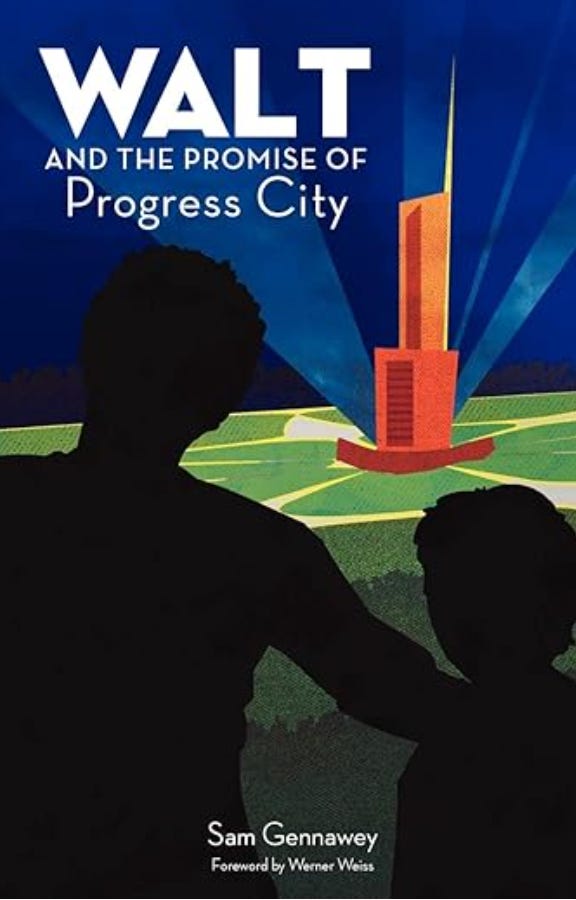
Getting back to Progress City, I remember way back when, about 12 years ago or so, I became curious about the story of Walt’s vision and little did I know that a friend of mine, and you may recognize this name, Sam Gennawey, actually wrote a book on this topic.
The name of the book? I had to steal part of the title for this substack- Walt and The Promise of Progress City.
Before I talk about the book allow me to speak about Sam Gennawey.
Sam has had quite a career. Let’s see…he spent time as a record store owner, president of an independent record label, promotion guy for a major record label, urban planner, planning historian, and public participation expert. He became so obsessed with Disney and Universal theme parks that he wrote four books about them.
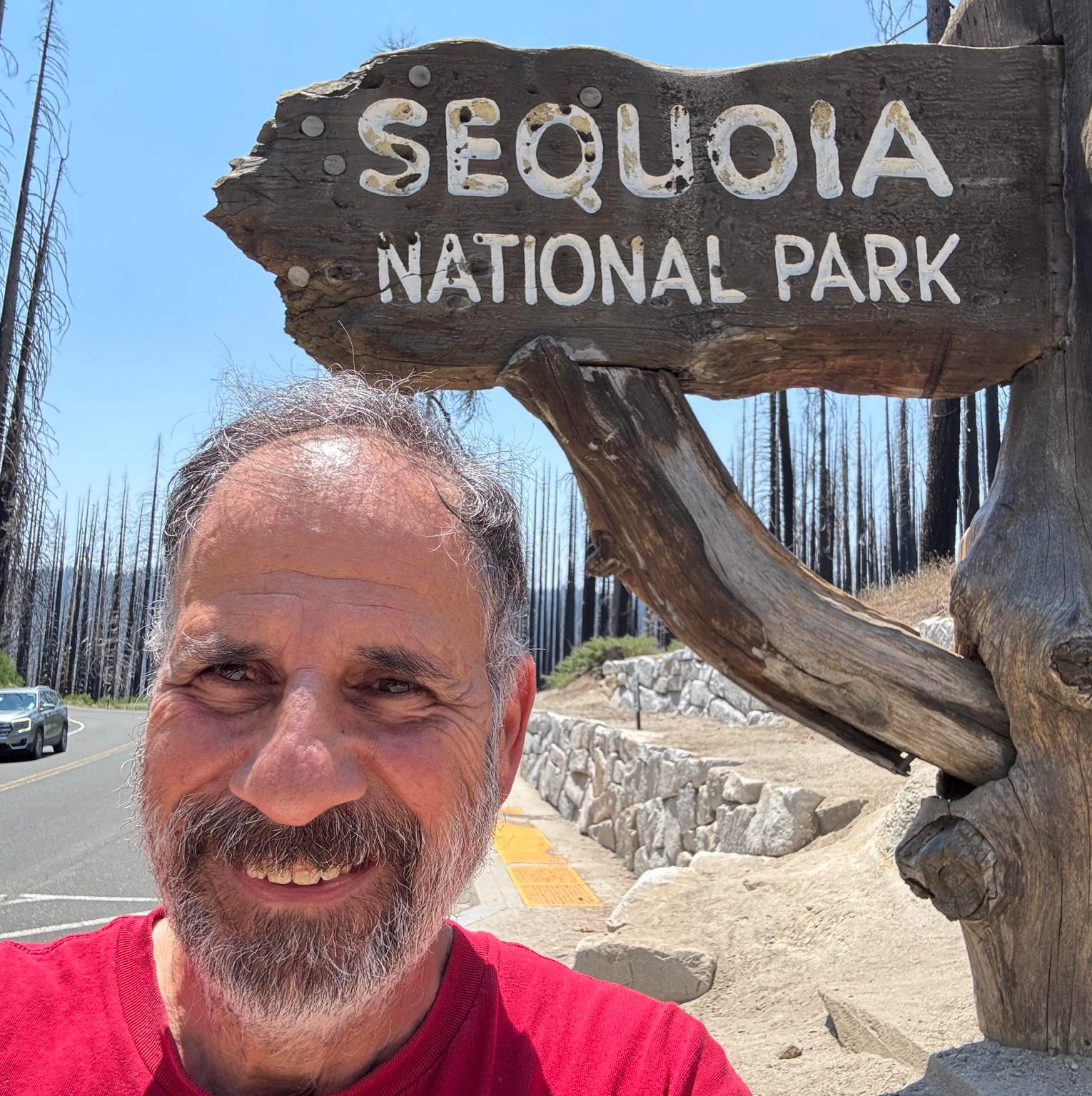
Sam is currently into the National Park System and when we last connected he told me he was about to move into Sequoia National Park for about six weeks but promised to come on the podcast sometime in the fall.
It is very appropriate that Sam Gennawey’s book, “Walt and the Promise of Progress City” available at Amazon.com, was released within several weeks of the celebration of the 40th Anniversary of the opening of Walt Disney World’s Magic Kingdom. Why appropriate? Although Gennawey’s book focuses on EPCOT, one realizes, once diving into this book, that what this California urban planner was telling his audience is beyond the design of EPCOT but the evolution of Walt Disney’s understanding of what a theme park should be.
Sam devotes much of his book to explaining the learning curve Walt Disney and his imagineers experienced while designing, building, and maintaining Disneyland. He sweeps up his audience and scoops them into his own monorail of progress and cites the influences, the people, the places, and the lessons learned that eventually led to what we now have in Orlando.
Gennawey, an urban planner by profession, makes it all very clear that a theme park was not built in a day, and, in regards to EPCOT, was not being built even in a decade but perhaps over a period of 25 years.
How does Gennawey get us on board with his thoughts? Very simply he takes us back to the beginning. One of the most overlooked aspects of Walt Disney’s legacy is that although he was a visionary, in many ways, he defined the building blocks for what makes a visionary, and that is…experience and education. Walt was very much a learner and a student of family entertainment and amusement parks. He studied his guests and tried to understand what made them tick.
Gennawey brings us to the inner circle of Walt Disney’s mind and uses his words to paint for us a portrait of how Walt’s thought processes took place. Along the way with each stroke of his author’s brush Sam slowly unveils the curtain that indicates exactly what the forces were that led to the concept of EPCOT.
One of the most interesting points made in this book was the revelation as to the number of people and influences that impacted how Walt and his staff envisioned what EPCOT should be.
Those who are students of the theme park industry and especially all things Disney would serve them well to dive into Gennawey’s work to discover the not so well known influences that led to the design of EPCOT.
For example, Gennawey points out how the obscure Disneyland episode, Magic Highways, USA which focused on the American highways system, required extensive research and brought with it dividends to Walt’s staff in terms of insight into how transportation technology has played a part in how America’s highways and cities have evolved. That insight led to other areas of research, which helped Walt, and his staff realize their need to understand what the future would not necessarily bring, but would require.
Gennawey’s book, often serves the audience as a remarkable time machine where the Disney fan can go back and experience what Walt and his creative team experienced in producing television shows and how this work influenced the construction of Disneyland…and thoughts of what should happen beyond Disneyland.
The design and development of Disneyland was truly an exercise and learning path in itself, as Sam implies, and the lessons learned from that experience would fuel many of the approaches that would be taken in what EPCOT should be.
Gennawey is quick to point out that Walt was never formally trained in urban planning but has made a significant impact in the way we perceive how to design and build cities. Walt understood the timeless way of building. More importantly, Gennawey tells us that not only did Walt want to tell us timeless stories but that he also wanted to create timeless places.
Sam brings all the concepts of urban planning to the level of Disney fans that will find themselves entertained by how he uses familiar Disney theme park landmarks to bring his readers to a deep and complete understanding of how these concepts work to appease the needs of the Disney guest.
Site lines, patterns, perspectives, and colors all play into what makes things work for Disney and Gennawey does his best to inform his readers on how all what is learned through Disneyland went a long way towards the design of EPCOT.
The best way to describe this book is to imagine walking down a long corridor and as you stop and admire each painting and get a new understanding for how the corridor was constructed, the corridor becomes more lit and you can admire another painting that gives you more information and more understanding until you reach the end and say, “Ahhh, now I understand how I got here!”
Unlike any other book written on Walt Disney World, “Walt and the Promise of Progress City” ia the complete chronicle of the influences that took place, the lessons learned from Disneyland, and the obscure experiences of Walt Disney and his staff that led to the concept of Epcot.
What’s more impressive is that Gennawey’s mastery storytelling makes this book a candidate for reading by anyone, be it a Disney fan, an aficionado of urban planning, or anyone interested in how an American success story can evolve over so many years.
Gennawey quotes author Ray Bradbury who says that Walt was ”…an optimal behaviorist…”who, “…knew that he could function in architecture, and later he used that power and raised it to its highest degree.”
Gennawey says, “Walt wanted to build an entire planned community based on this belief. He wanted to change the public’s expectations of what a city-and happiness-could be.”
In closing I need to admit that reading “Walt and the Promise of Progress City” made me all too aware of gaps in my knowledge of how Walt Disney and his staff were influenced in theme park design and development. Sam Gennawey has very eloquently filled those gaps for me and has helped me fully understand and appreciate even more, the amazing visionary of the 20th Century, Walt Disney.
On a personal note I spent a day with Sam in Disneyland and it was a day I will never forget. The things he pointed out to me gave me new perspective on the theme park, not to mention riding Mr. Toad’s Wild Ride with Sam…I never stoped laughing..and Sam used his charm to get me to actually steer the Mark Twain Riverboat through the Rivers of America.
So hurry back Sam and lets talk about Progress City and the National Parks.
To be continued…see you next time.